



Calcium Channel
Ca2+ channels; Ca channels
Calcium channel is an ion channel which displays selective permeability to calcium ions. It is sometimes synonymous as voltage-dependent calcium channel, although there are also ligand-gated calcium channels. Voltage-gated calcium (CaV) channels catalyse rapid, highly selective influx of Ca2+ into cells despite a 70-fold higher extracellular concentration of Na+. Some calcium channel blockers have the added benefit of slowing your heart rate, which can further reduce blood pressure, relieve chest pain (angina) and control an irregular heartbeat.
Calcium Channel Isoform Specific Products
All Product Categories
-
Calcium Channel Inhibitors
(584)
View all products
-
Calcium Channel Agonists
(35)
View all products
-
Calcium Channel Antagonists
(210)
View all products
-
Calcium Channel Activators
(86)
View all products
-
Calcium Channel Modulators
(45)
View all products
-
Calcium Channel Chemical
(1)
View all products
-
Calcium Channel Inducers
(11)
View all products
-
Calcium Channel Controls
(10)
View all products
-
Calcium Channel Ligands
(7)
View all products
-
Calcium Channel Related Products (1225)
Related Products (1225)

-
Antibodies (29)
-
Related Compound Screening Libraries (1)
-
Calcium Channel Isoform Comparison
-
Ranolazine-d3
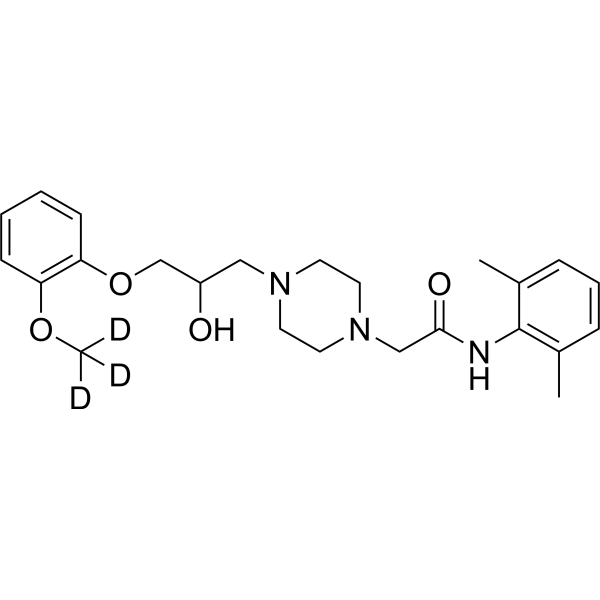 0 ImagesRanolazine-d3 is the deuterium labeled Ranolazine. Ranolazine (CVT 303) is an anti-angina agent that achieves its effects by inhibiting the late phase of inward sodium current (INa and IKr with IC50 values of 6 μM and 12 μM, respectively) without affecting heart rate or blood pressure (BP). Ranolazine is also a partial fatty acid oxidation (FAO) inhibitor. Antianginal agent.
-
Diltiazem-d6
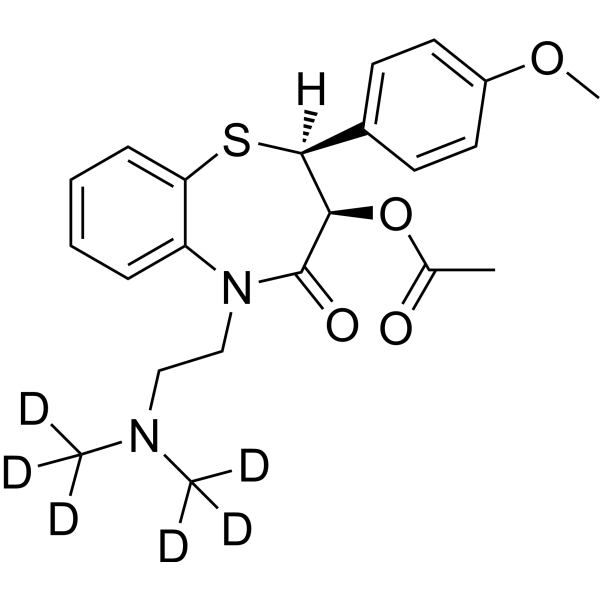 0 ImagesCat. No.: HY-B0632SCAS No.: 1242184-41-3Diltiazem-d6 is the deuterium labeled Diltiazem. Diltiazem is an orally active L-type Ca2+ channel blocker, with antihypertensive and antiarrhythmic effects. Diltiazem can be used for the research of cardiac arrhythmia, hypertension, and angina pectoris.
-
Clevidipine-d7
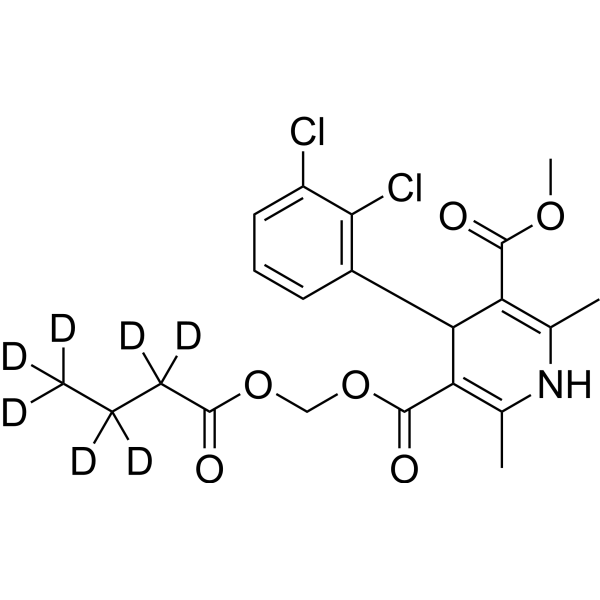 0 ImagesCat. No.: HY-17436S1CAS No.: 2747918-66-5Clevidipine-d7 is the deuterium labeled Clevidipine. Clevidipine is a short-acting dihydropyridine calcium channel antagonist (IC50= 7.1 nM, V(H) = -40 mV ) under development for treatment of perioperative hypertension.
-
RyRs activator 3
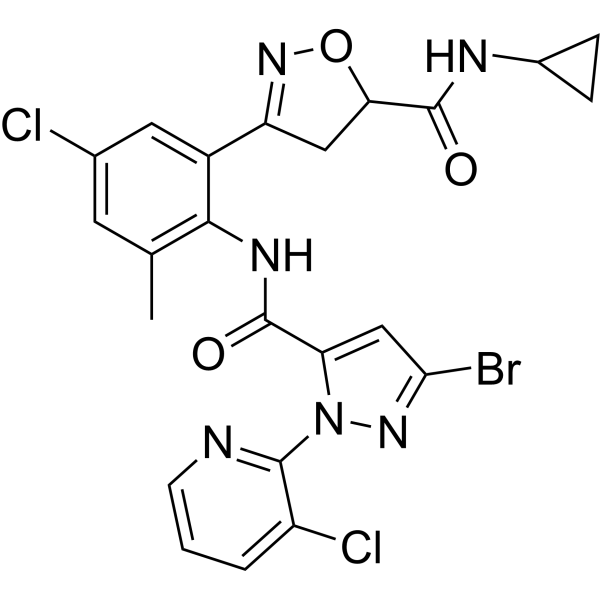 0 ImagesCat. No.: HY-156082CAS No.: 2850333-35-4RyRs activator 3 (compound A4) is an effective insecticide against diamondback moths (M. separata) and diamondback moths (P. xylostella). The LC50 value of RyRs activator 3 against diamondback moth is 3.27 mg/L. RyRs activator 3 can bind to ryanodine receptor, increase cytoplasmic Ca2+ concentration, and produce biological toxicity.
-
Ethaverine hydrochloride (Standard)
 0 ImagesEthaverine hydrochloride (Standard) is the analytical standard of Ethaverine hydrochloride (HY-B1440). This product is intended for research and analytical applications. Ethaverine hydrochloride is a Papaverine derivative and vasodilator. Ethaverine hydrochloride inhibits Phosphodiesterase, Tyrosine hydroxylase, and MAO-B. Ethaverine hydrochloride blocks L-type Ca2+ channels, reduces intracellular Ca2+ levels, inhibits platelet adhesion and aggregation, regulates cardiac conduction and heart rate, and increases peripheral and cerebral blood flow. Ethaverine hydrochloride alters cochlear microcirculation, intracochlear Po2, CM potential, and EP in guinea pigs, and induces transient hypotension. Ethaverine hydrochloride is used in the research of peripheral vascular diseases.
-
KS0365
 0 ImagesCat. No.: HY-186172CAS No.: 1689577-22-7KS0365 is a selective TRPV3 agonist with an EC50 of 5.08 μM. KS0365 does not activate TRPV2 or TRPV4 channels. KS0365 triggers an increase in [Ca2+]i and accelerates keratinocyte migration. KS0365 can be used in studies related to impaired skin wound healing.
-
Etripamil hydrochloride
 0 ImagesCat. No.: HY-17611A1CAS No.: 2560549-35-9Synonyms: MSP-2017 hydrochloride; (-)-MSP-2017 hydrochlorideEtripamil (MSP-2017) hydrochloride is a short-acting, L-type calcium channel antagonist that can be used in the study of paroxysmal supraventricular tachycardia (PSVT). Etripamil hydrochloride inhibits calcium influx through slow calcium channels, thereby slowing atrioventricular node conduction and prolonging the atrioventricular node refractory period.
-
Capa-2
 0 ImagesCat. No.: HY-P11380CAS No.: 454186-80-2Capa-2 is a neuropeptide. Capa-2 activates calcium ion influx, stimulates the production of NO, activates soluble guanylate cyclase (sGC), increases intracellular cGMP, and drives ion and fluid secretion. Capa-2 can be used in studies of diuresis.
-
Mast cell degranulating peptide (28-49)
 0 ImagesCat. No.: HY-P1987CAS No.: 65636-54-6Mast cell degranulating peptide (28-49) is a depolarizing agent from bee venom, it can raise the content of cGMP level in mouse cerebellar slices.
-
Decumbensine
 0 ImagesDecumbensine ((+)-Egenine) is a phthalideisoquinoline hemiacetal alkaloid present in Corydalis decumbens. Decumbensine significantly inhibits spontaneous calcium oscillations in primary cultured neocortical neurons, reducing oscillation frequency and amplitude. Decumbensine can be used in studies related to central nervous system diseases, epilepsy and pain.
-
(-)-Gallopamil hydrochloride
 0 ImagesCat. No.: HY-118202ACAS No.: 36622-39-6Synonyms: (-)-Methoxyverapamil hydrochloride(-)-Gallopamil (hydrochloride) exerts a selective modulation of the fast voltage-dependent inactivation. (-)-Gallopamil (hydrochloride) inhibits efficiently Cav1.2 constructs formed by β-subunits (promoting fast voltage-dependent inactivation). (-)-Gallopamil (hydrochloride) also accelerates the voltage-dependent phase of ICa decay (as well as the voltage-dependent decay of Ba2+ currents). (-)-Gallopamil (hydrochloride) is promising for research of antiarrhythmics.
-
Lercanidipine-13C,d3 hydrochloride
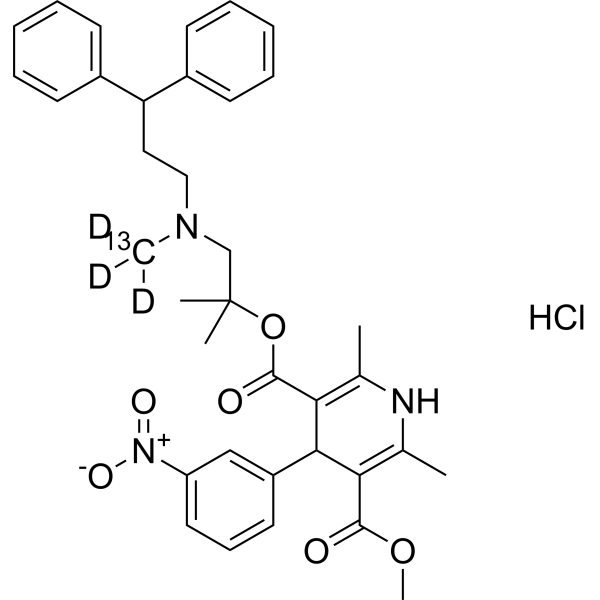 0 ImagesCat. No.: HY-B0612ASCAS No.: 1261397-71-0Lercanidipine-13C,d3 (hydrochloride) is the deuterium and 13C labeled Lercanidipine hydrochloride. Lercanidipine hydrochloride is a lipophilic third-generation dihydropyridine-calcium channel blocker (DHP-CCB). Lercanidipine hydrochloride has long lasting antihypertensive action and reno-protective effect.
-
Topiramate lithium
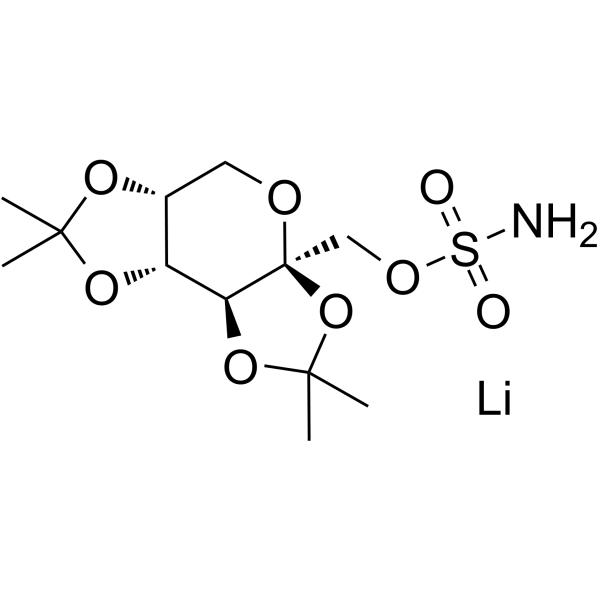 0 ImagesCat. No.: HY-B0122ACAS No.: 488127-53-3Synonyms: McN 4853 lithium; RWJ 17021 lithiumTopiramate (McN 4853) lithium is a broad-spectrum antiepileptic agent. Topiramate lithium is a GluR5 receptor antagonist. Topiramate produces its antiepileptic effects through enhancement of GABAergic activity, inhibition of kainate/AMPA receptors, inhibition of voltage-sensitive sodium and calcium channels, increases in potassium conductance, and inhibition of carbonic anhydrase.
-
Lacidipine-13C4
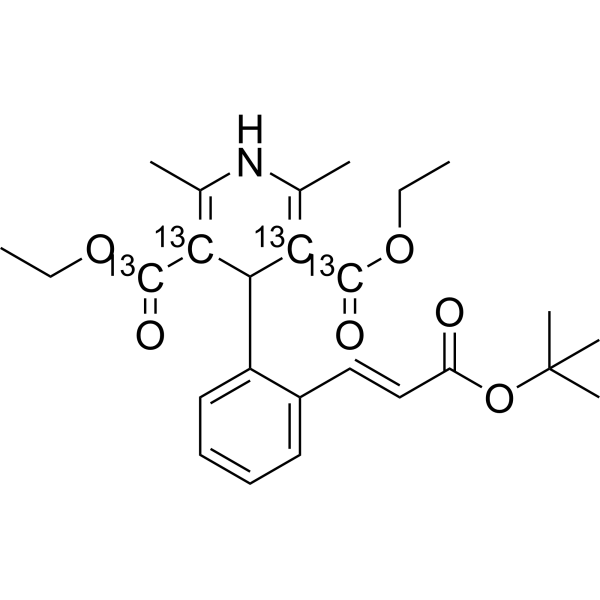 0 ImagesCat. No.: HY-B0347S3Lacidipine-13C4 is 13C labeled Lacidipine (HY-B0347). Lacidipine is an orally active and highly selective L-type calcium channel blocker that acts on smooth muscle calcium channels, primarily dilates peripheral arteries, reduces peripheral resistance, and has long-lasting anti-hypertensive activity. Lacidipine protects HKCs from apoptosis induced by ATP depletion and recovery by modulating the caspase-3 pathway. Lacidipine can be used in studies of hypertension, atherosclerosis and acute kidney injury (AKI).
-
JNJ-26489112
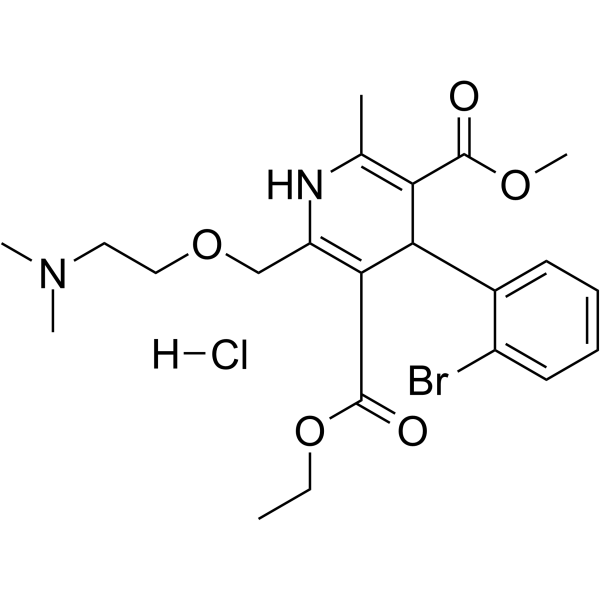
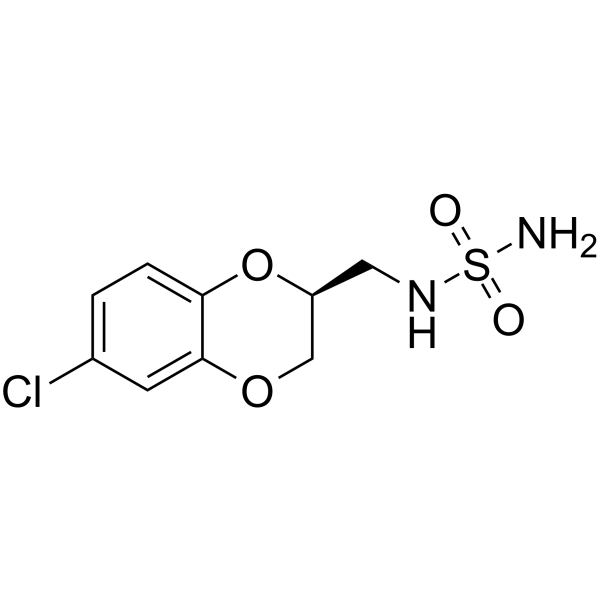 0 ImagesJNJ-26489112, a CNS-active agent, exhibits broad-spectrum anticonvulsant activity in rodents against audiogenic, electrically-induced, and chemically-induced seizures. JNJ-26489112 inhibits voltage-gated Na+ channels and N-type Ca2+ channels, and is effective as a K+ channel opener. JNJ-26489112 has very weak inhibition of CA-II (IC50=35 μM) and CA-I (18 μM).
-
IAA65
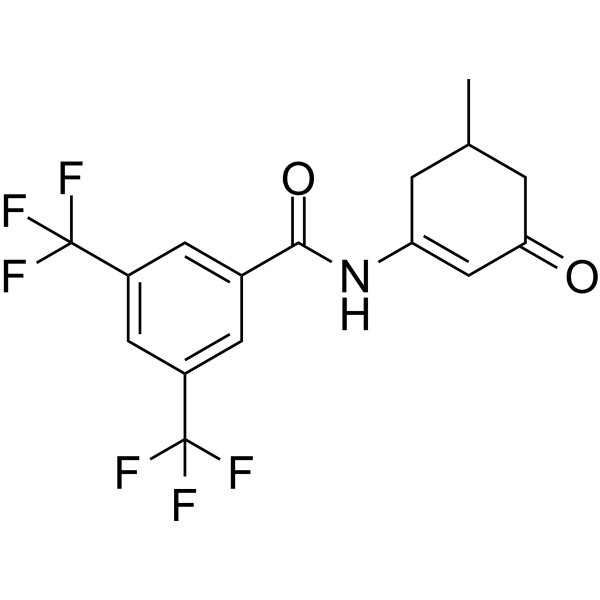 0 ImagesCat. No.: HY-150541CAS No.: 2987139-96-6IAA65 is a potent T-type calcium channel inhibitor with a IC50 value of 18.9 µM. IAA65 can be used for epilepsy research.
-
UK 55444
 0 ImagesCat. No.: HY-108982CAS No.: 97290-20-5UK 55444 is a calcium antagonist. UK 55444 has coronary vasodilator activity.
-
RCC-36 hydrochloride
 0 ImagesCat. No.: HY-182599CAS No.: 129927-37-3RCC-36 hydrochloride is an L-type calcium channel inhibitor and competitive muscarinic receptor antagonist. RCC-36 hydrochloride inhibits L-type calcium currents in voltage- and concentration-dependent fashion with no effect on cardiac K+ currents. RCC-36 hydrochloride suppresses maximum acetylcholine-induced contractile responses, inhibits detrusor muscle contractions induced by potassium chloride, calcium chloride, and electric field stimulation, including atropine-resistant contractions. RCC-36 hydrochloride can be used for the research of urinary frequency, urinary incontinence, and bladder overactivity.
-
CTP-amiodarone
 0 ImagesCat. No.: HY-P10773CTP-amiodarone is a cell-penetrating conjugate of cardiomyocyte targeting peptide and Amiodarone (HY-14187). CTP-amiodarone exhibits antiarrhythmic efficacy through block of Na+, K+, Ca2+ channels and β-adrenergic receptors.




